 Skip to content
Primary School
6 — 14 years | Class 1 — 8
In the Primary School, the Waldorf curriculum is tailored in such a way that it meets the child at each developmental transition through the ages by focusing on age-appropriate learning. The story content and age-specific skill development works together with experiential learning and engages the children’s feelings. In doing this, it makes learning effortless, ignites a sense of wonder and interest in the world, and engenders a life-long love of learning.
The Class Teacher
One of our unique offerings is the ideal that the class teachers at Michael Mount are entrusted with their class from Class 1 to Class 8. This provides the children with a consistent guide through their schooling journey, allowing for continuity, stability, and a deep understanding of each individual. The teacher integrates formal academic learning with the individual needs of each child in their care. The Primary School years engage the emotions, developing empathy, imagination and creativity, and instilling confidence, curiosity, and seeds of resilience in preparation for the demands of the High School.
The Main Lesson
Another key element in our Primary School is the Main Lesson. Waldorf students start each day with their morning Main Lesson, which is a two-hour long lesson in which they spend time concentrating on one subject over a period of 3-4 weeks. This allows the children to become thoroughly immersed in a specific topic, exploring it through many mediums and avenues, creating a space for holistic learning.
A product of these Main Lessons is the unique record of work the children create. The Main Lesson books are a compilation of handwritten notes and illustrations from the Main Lesson block. Creating these books instils within each child a sense of direct engagement with the material and allows them to comprehend and express the information in a format that suits them best. In addition, Waldorf students start to feel that they own the knowledge they are acquiring. This creates a sense of purpose, responsibility, and satisfaction.
A Holistic Education
Music, drama, handwork, poetry, art, craft, and rhythmic movement form part of the school day. While igniting the creative spark in our students, these practices also serve as a means to present school subjects in an impressionable way, simultaneously developing the child’s will, moral understanding, and awareness of their position in the world.
The children do not partake in formal testing or examinations in Primary School. Rather, the class teacher conducts continuous assessment of their students throughout the year. Children also receive limited homework as the full curriculum is covered in the school day.
A look at our curriculum
Alongside the developmentally specific content listed below, our children also engage in Afrikaans and isiZulu additional language lessons, present a yearly class play, and attend music (singing and recorder), eurythmy (a form of rhythmic movement), library, and sports lessons. They also attend craft, handwork, and woodwork lessons.
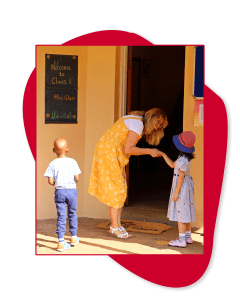
 Class 1 children live strongly in the realm of imagination and relate to the world through pictures and stories. Dry, abstract concepts that are delivered too early are hardening and limiting for the child. To meet the children at this developmental stage, all new concepts are introduced through story and are imbued with images. This appeals to their imagination and emotions and thus makes learning accessible.
- Main lessons:
- Literacy
- Numeracy
- Fairy tales and Nature stories
- Literacy: Introduction to the alphabet – from story, to picture, to symbol, consolidated through movement and art
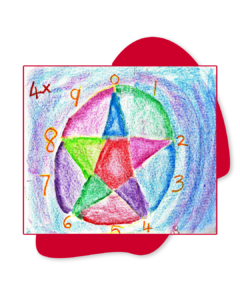
- Numeracy: The quality of numbers, counting to 100, Roman and Arabic numerals, the four processes: addition, subtraction, multiplication, division
- Form drawing: straight and curved lines
- Handwork: knitting and sewing
 Class 2 children find themselves in a world of duality, one foot still on the rainbow bridge and the other foot firmly planted on the ground. The curriculum meets this age group by emulating the duality they are experiencing through specific story content. The children explore the legends of Saints and good people, who live with deep compassion and strive to do profound good in the world. They also then hear animal fables and folklore where the failings of certain characteristics are exposed. The children quickly identify the messages in these stories as opposed to being lectured on how to behave.
- Main lesson:
- Fables and Animal folklore
- Legends of the Saints
- Literacy: Handwriting of upper- and lower-case letters; phonics and sight words; writing simple sentences; reading
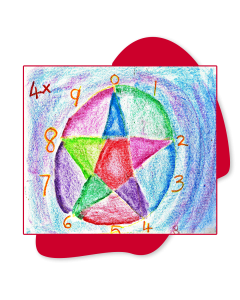
- Numeracy: Continuing work with the four processes: addition, subtraction, multiplication, division; introduction to place value, written forms of the times tables, and number patterns
- Form drawing: Running forms as preparation for cursive writing; symmetrical forms
- Handwork: Knitting using both plain and purl stitch
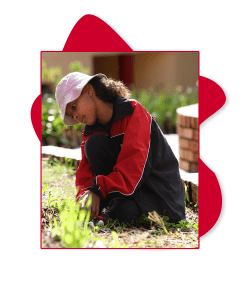
 Class 3 sees the children cross a pronounced threshold that results in a psychological, emotional, and spiritual transition. They lose their forces of imitation and suddenly feel quite separate from the world, and quite alone. We need to help them find a new relationship to their world and the curriculum does this. It replaces the sense of feeling separate from the world with a feeling of responsibility for the world and engages the children in farming, gardening, building, baking, and crafting.
- Main lesson:
- Farming
- Building
- Gardening
- Old Testament stories
- Handcrafts
- Literacy: Cursive writing; own compositions based on experience; introduction to parts of speech
- Numeracy: Time, weight, volume, linear measurement, and money; vertical calculations of all four operations
- Handwork: Crochet
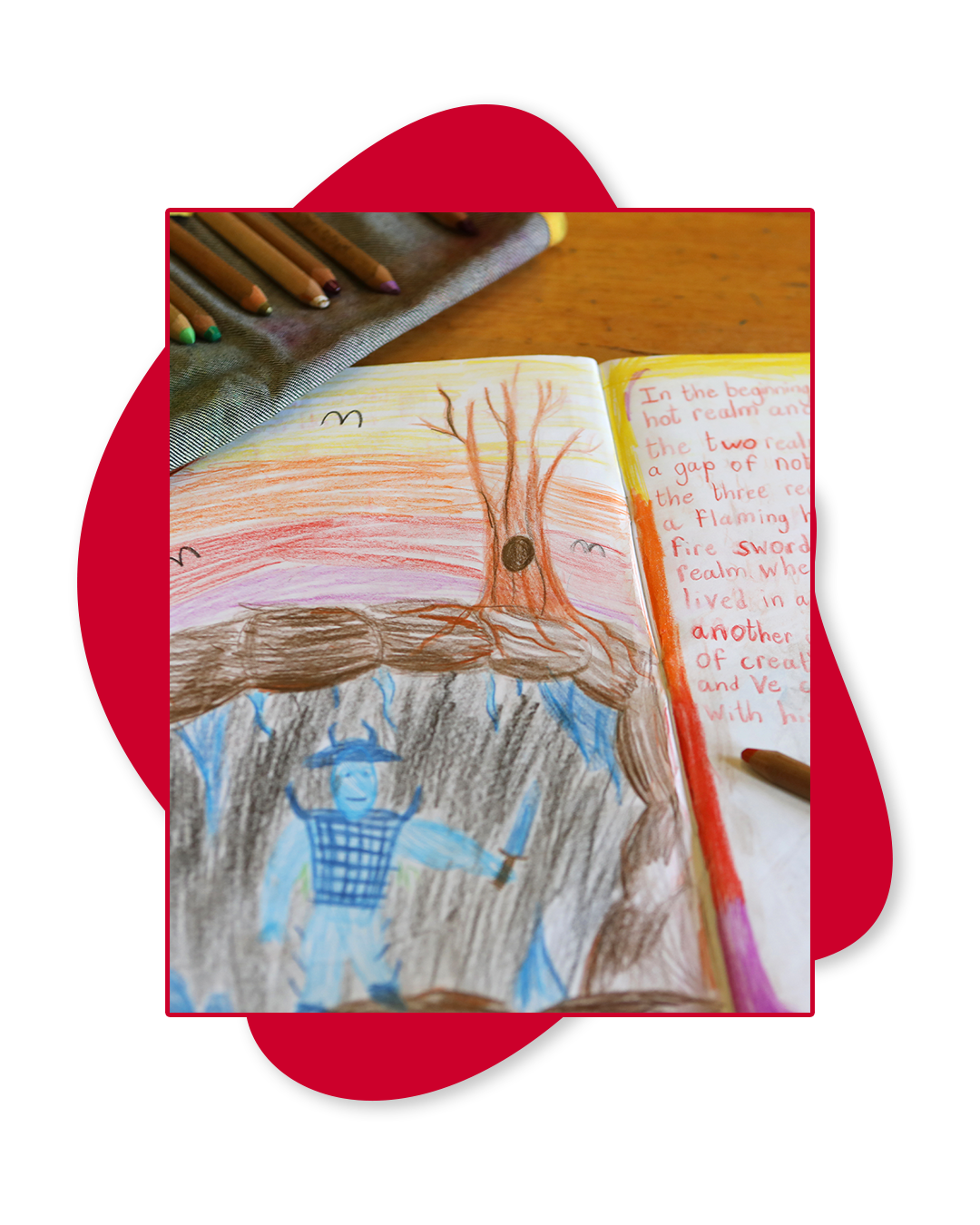 The children have crossed the threshold and now start to explore a bit more of who they are and their budding individual personalities start to reveal themselves. Here, the curriculum works with stories of Norse mythology that provide a multiplicity of personalities for the children to align with and play out.
- Main lesson:
- Norse mythology
- Local geography
- The Human Being and the Animal Kingdom
- Literacy: Grammar – the nine parts of speech; own writing and dictation; reading and spelling
- Numeracy: Introduction to fractions; long division
- Form drawing: Celtic knots
- Handwork: Cross stitch
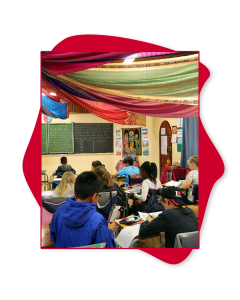
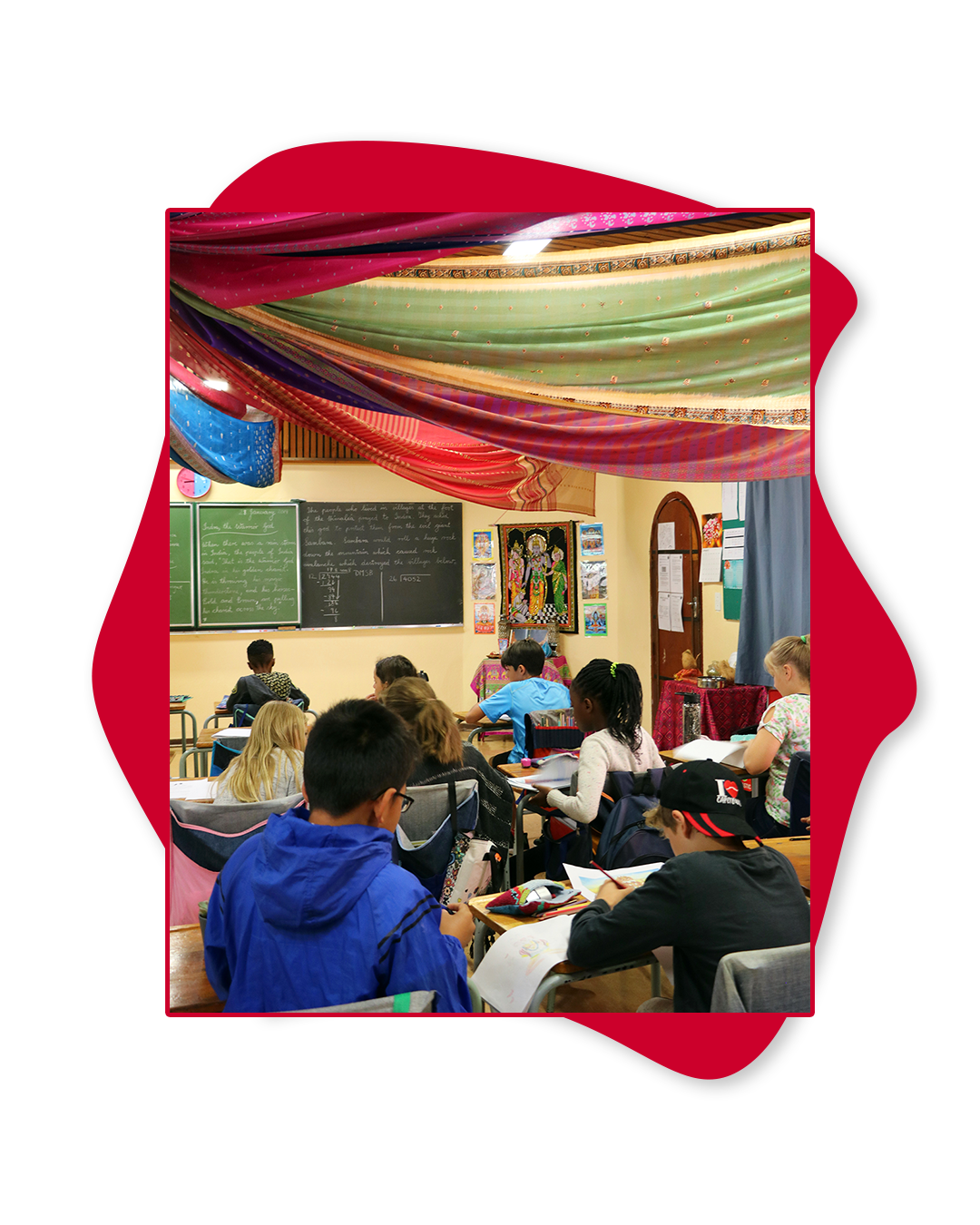 Class 5 is classically referred to as the golden year of childhood. The children are full of life forces and at their most graceful and balanced in their bodies. To match this, the curriculum explores the etheric world of plants in Botany and the story content for the year is drawn from the ancient epochs.
- Main lessons:
- Botany
- Ancient India, Persia, Mesopotamia, Egypt and Greek Mythology
- South African Geography
- Literacy: Comprehension; direct and indirect speech; active and passive voice
- Numeracy: Fractions and decimals; geometry
- Handwork: 4-needle knitting
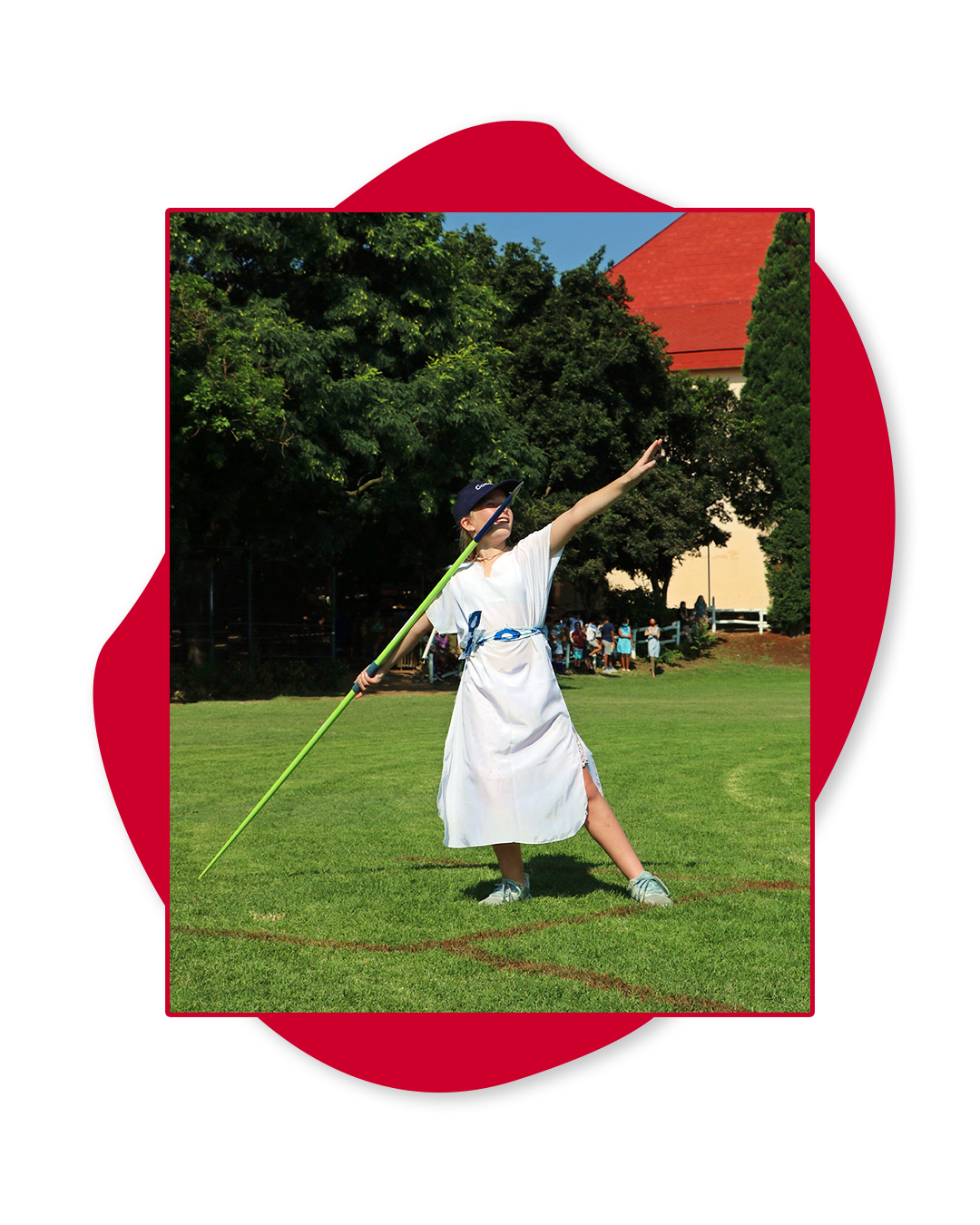 Class 6 comes with less grace in the children's movements. This is the year when intellect truly begins to awaken and the 12-year-old starts to develop a sense of judgement, and an understanding of cause and effect. This is when the curriculum introduces the first physics experiments so that through observing these phenomena, the understanding of cause-and-effect becomes experience-based knowledge. The law and order of Ancient Rome appeals to them now, and they want to understand the world around them and explore this notion of consequence. This year ends in the Dark Ages, a mirror of the stormy pre-pubescent that feels quite heavy in their bodies.
- Main lesson:
- History of Greece, Ancient Rome and The Middle Ages
- Physics – light, heat, magnetism
- African geography
- Numeracy: Percentage and ratio, Business Mathematics
- Handwork: Devising a pattern to make an animal
 In this year in we try to strike a balance between the inner and the outer world of the child. We allow the adolescent to look within as we study physiology, nutrition and digestion, and the respiratory and circulatory systems. We then take them right out of themselves to explore the cosmos in astronomy. Creative writing then allows them to reflect and be introspective, and finally the Renaissance and the period of enlightenment brings an element of hope and light to them as they embrace these newly formed ideals and thoughts.
- Main lesson:
- The Age of Exploration
- Renaissance and Reformation
- Health and Nutrition
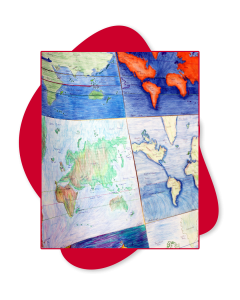
- World Geography
- Physics – laws of mechanics
- Chemistry – combustion
- Literacy: Poetry and Creative writing
- Mathematics: Algebra, Negative Numbers, Square and Cube Roots; Fibonacci and Pythagoras
- Handwork: Felt and slipper-making
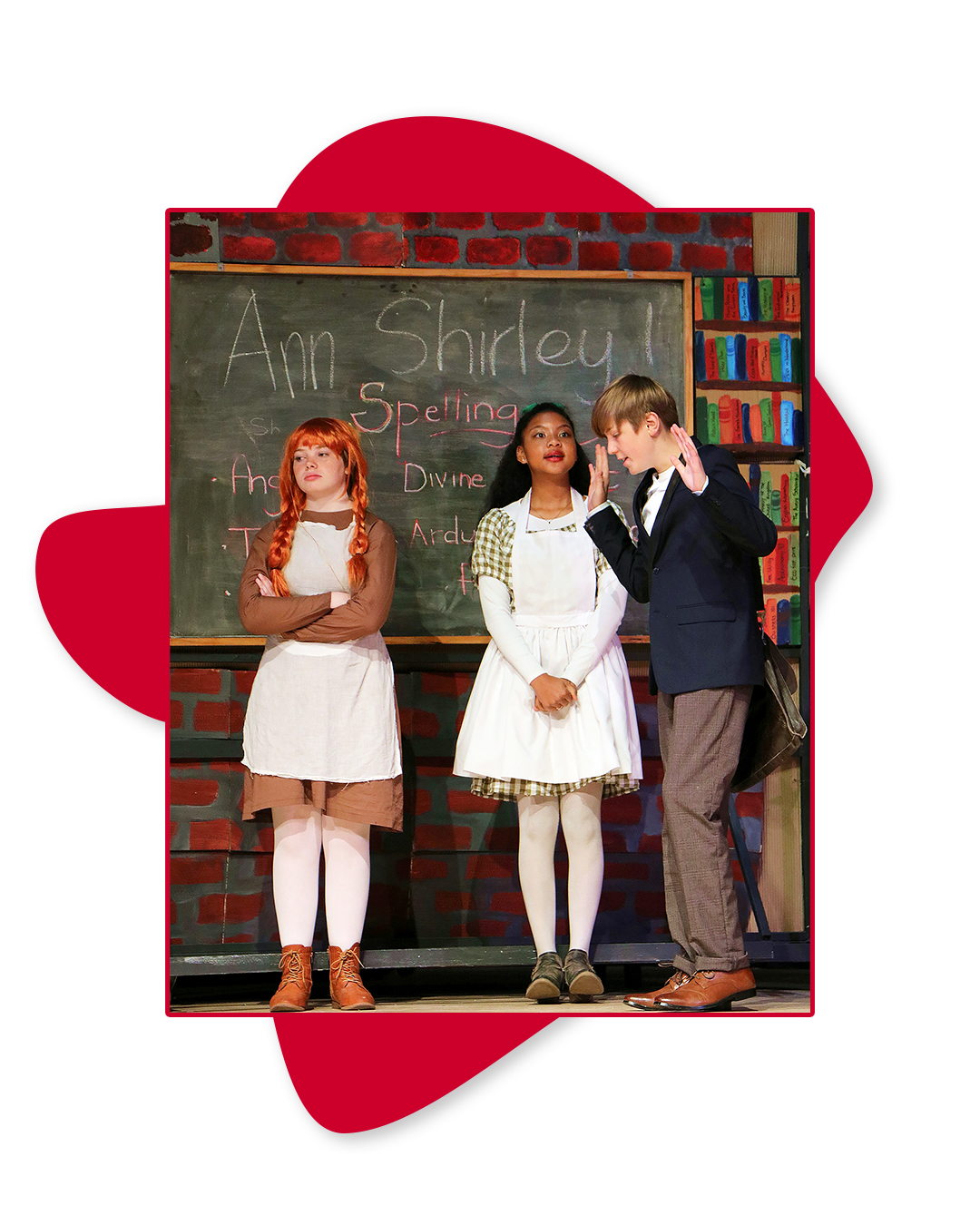 Class 8 is an important year as it is the bridge into High School. The class teacher begins to cut ties with the children and in the middle of the year, they are welcomed formally into the High School, with the class teacher accompanying them in this transition. The children are gradually introduced to the High School teachers and subjects. Part of this year is also the social experience of producing a class play which is presented to community. This is an important step which allows the children to truly bond as a family while their teacher begins to step away.
The class teacher can look back on this 8-year journey knowing that a rich and comprehensive education has provided the children with vivid, imaginative experiences. As the children transition into High School and beyond, this imagination gives way to rich, diverse, and morally-sound thinking.
- Main lessons:
- History – The Industrial Revolution to the present day
- Geography
- Physiology – The skeleton
- Organic Chemistry
- Physics – Steam and fluid mechanics
- Literacy: Short stories; Poetry; Shakespeare
- Mathematics: Practical applications of arithmetic, algebra, geometry, graphing; Platonic Solids
- Handwork: Machine sewing